Present Day
Daily innovation on the technology and chemistry behind nuclear imaging occurs as nuclear imaging has become the forefront of patient diagnosis technology. Saving countless lives every single day.
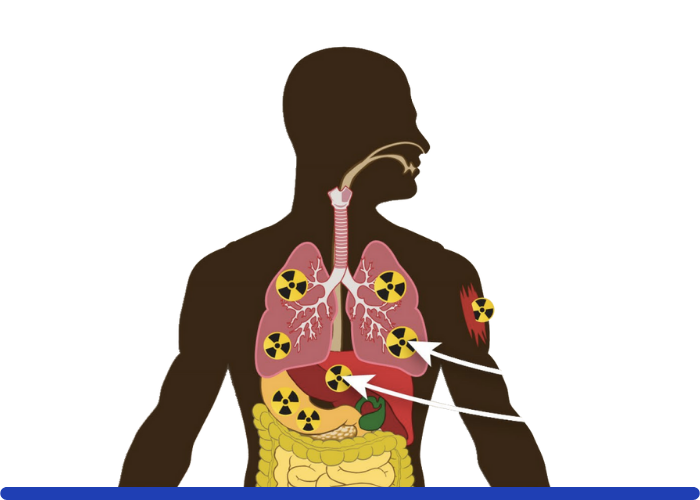
Nuclear medical imaging/diagosis is a medical specialty in which radioactive tracers (radiopharmaceuticals) are used to assess bodily functions and to diagnose and treat disease. It is a method of producing images by detecting radiation from different parts of the body after the radioactive tracer is given to the patient.
Nuclear medicine imaging techniques give doctors another way to look inside the human body. The techniques combine the use of computers, detectors, and radioactive substances allowing medical professionals to easily detect tumors, aneurysms (weak spots in blood vessel walls), irregular or insufficient blood flow to various tissues, blood cell disorders, and organ dysfunction, such as thyroid and pulmonary function deficiencies.
Dive DeeperLorem ipsum dolor sit amet, consectetur adipiscing elit, sed do eiusmod tempor incididunt ut labore et dolore magna aliqua. Quis ipsum suspendisse ultrices gravida.


Daily innovation on the technology and chemistry behind nuclear imaging occurs as nuclear imaging has become the forefront of patient diagnosis technology. Saving countless lives every single day.

From 1972 to 1975 Benedict Cassen developed the first rectilinear scanner and Hal Anger’s scintillation camera helped establish nuclear medicine as a fully developed medical imaging speciality.

By the 1950s, the clinical use of nuclear medicine had become widespread as researchers increased their understanding of detecting radioactivity and using radionuclides to monitor biochemical processes.

Nuclear medicine first became recognised as a potential medical speciality in 1946 when it was described by Sam Seidlin in the Journal of the American Medical Association.
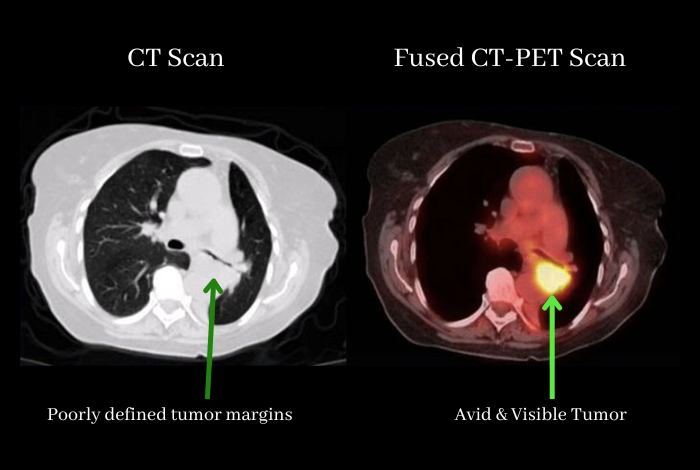
Nuclear medicine offers the potential to identify disease in its earliest stage, often before other diagnostic tests can detect symptoms or abnormalities. Diseases such as cancer can be treated more successfully if caught and diagnosis is made much earlier. Which is why nuclear medicine plays a pivotal role in medical diagnoses and can help give medical staff the early diagnosis for the patient, and a more localized point for treatment. Severely increasing the chances of survival and recovery for patients.
In addition the radiation emitted from the radioactive tracers is independent of pressure, temperature, chemical and physical state thereby not affecting the patient undergoing the medical diagnosis physically at any point during the scan whether that be during or after the imaging. This allows for a pain free, reduced stress evaluation which not only provides better results for medical staff to work with but also creates an easy process for the patient in an already overwhelming and daunting environment.
The radiation risk posed by nuclear medicine is the biggest possible risk. Thankfully the radiation risk associated with these procedures is extremely low when weighed against the potential benefits. Diagnostic nuclear medicine procedures, which have been used for more than 50 years, have no known long-term adverse side effects. Allergic reactions are possible, but they are extremely rare and usually mild. This risk for radiation comes from the amount of radiotracer used in nuclear medicine scans which is kept extremely small in order to ensure patient safety, and the patient's exposure to these tracers is also minimal. However ensuring the right amount is used is very risky, nuclear medicine specialists apply the ALARA principle (As Low As Reasonably Achievable) to carefully select the amount of radiopharmaceutical that will provide an accurate test while exposing the patient to the least amount of radiation.
Lastly the disadvantage, as much as it is effective, it is very expensive. Equipment costs, purchase cost, setting up cost, operations and maintenance, everything comes with heavy expenditure. This is one of the biggest disadvantages when it comes to nuclear medicine as it can range anywhere from $382 to $1,063 per scan!
If you have any thoughts or opinions on Nuclear Medicine Imaging and its implementation of chemistry I would love to reviece a quick message using the form below.